You are currently logged-out. You can log-in or create an account to save favorites and more. more info
Embracing Complexity in Human Nature
AI Suggested Keywords:
The talk outlines a perspective on embracing the inherent complexity within human nature by addressing issues of identity, differentiation, and spiritual development. It critiques social norms that impose suffering for self-expression and highlights the integration of masculine and feminine traits as vital to personal balance and acceptance. The discussion further explores anthropocentrism in religious artifact interpretation, the symbolic representation in Asian art, particularly the Tantric tradition, and the application of these understandings in meditative practices aiming for spiritual liberation through confrontation with elemental human forces.
Referenced Works:
- Teilhard de Chardin - Emphasized the evolutionary perspective on human complexity and spiritual reality.
- Henri Bergson's "Creative Evolution" and "Time and Free Will" - Discuss the philosophical understanding of evolution and free will.
- Martin Buber's "I and Thou" - Explores personal relationships and divine reality, aligning with the speaker's theme of individual freedom and spiritual connection.
- Gabriel Marcel - Noted for examining existential questions and human ontology, which are relevant to the discussion on freedom and spiritual expression.
- Freud's "Civilization and Its Discontents" - Acknowledges the darker aspects of human nature, important to the discussion of embracing and integrating the shadow self.
- Aristotle's Treatises on Poetry - Discussed the cathartic role of drama, paralleling the talk's emphasis on purging and transformation.
- Esther Harding's "Psychic Energy: Its Source and Goal" and Erich Neumann's "The Great Mother" - Analyzed the transformative potential in channeling psychic energy, aligning with discussions on yoga and personal confrontation.
AI Suggested Title: Embracing Complexity in Human Nature
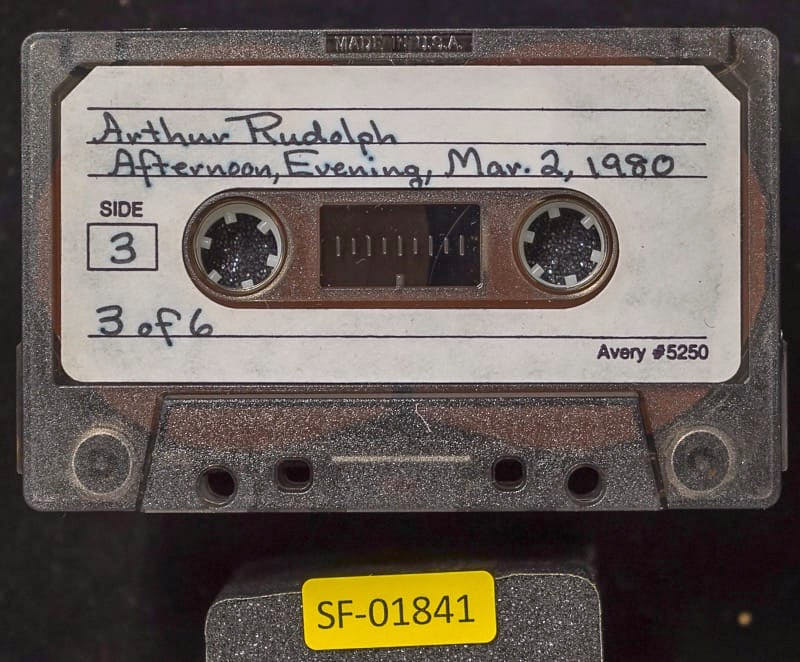
Side: 3
Speaker: Arthur Rudolph
Location: 3 of 6
Possible Title: Afternoon, Evening
Additional text:
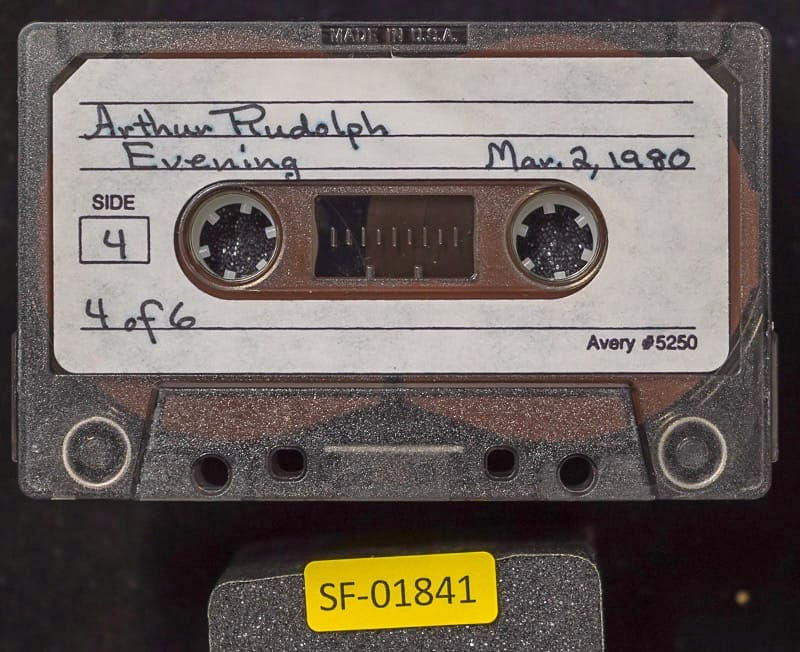
Side: 4
Speaker: Arthur Rudolph
Location: 4 of 6
Possible Title: Evening
Additional text:
@AI-Vision_v003
Recording starts after beginning of talk.
Well, in a very obvious way, for example, external behavior may be regarded as inappropriate by the norms of various more dominant cultural groups. For the most part, there are many strictures against homosexuality. For the most part, there are many strictures against women driving trucks or men reading and writing poetry, things of that sort. Now, I'm not a sufficiently good theologian to say that the more you suffer, the better off you are.
[01:02]
I don't believe that there is any intrinsic inherent value to needless suffering. Needless suffering. From my perspective, needless suffering is masochism, which by definition is a pattern of mental ill health. Just as To inflict suffering and enjoy it, sadism is mental ill health. So I wouldn't, I know that people say very moralistically and very profoundly, the more that you suffer for your self-expression, the better you will enjoy it. Well, if you carry that to its conclusion, let's say that you are on the rack for expressing your love of flowers and picking flowers in fields that the Inquisition monks don't approve of.
[02:13]
Now, clearly, if you spend 39 years on the rack, you won't have much time to pick flowers and enjoy their scent. So if you carry it to its absurd extreme, but logically consistent extreme, you have only suffering and no enjoyment. And so a person who, for healthy self-expressive reasons, follows a course of vocational choices or sexual preference choices or interest choices that some people disapprove of will usually find, first of all, that if he looks about himself or she looks about herself, the person will find a good number of like-minded persons.
[03:22]
and be able to have a compassionate communal relatedness with some other people who are quite kindred to oneself. And if a person has a need to place a label that marks them as other than other people, as for example, living and dying, a word like gay or a word like feminist or a word like whatever it may be, I question that the person involved is very liberated, is very gay liberated, is very feminist liberated, is very black liberated, or whatever the case may be. A black who's always a black in a white world and never lets go of that is mighty lopsided and there isn't much way involved in it.
[04:34]
So I think that the affirmation of either one's values or one's patterns of life or one's preferences is something that all things equal should be done and done honestly and would cry. Well, if a person feels that he or she is uncomfortable and unhappy with a set of values, practices, goals, or whatever, I don't see anything wrong with altering the situation and becoming happy if this is the motivation of the individual.
[05:42]
And it isn't because this one or that one disapproves of it because I would find it hard to find any values or practices that can't launch apart from those that deny liberty and freedom to other human beings that would universally hold a good or bad or right or wrong for anyone. But if a person is unhappy about a given state of affairs, then I think it would be appropriate to take corrective measures about it if you feel out of harmony with a certain direction. A lot of people feel out of harmony, though, not because of their own promptings, but because of a desire to be pleasing to an authority.
[06:46]
parent, or another significant figure, or community group, or whatever it may be. And the motivation for the change and the motivation for the unhappiness is external to the person's own ingredient. In that case, the desire to change, I would regard as ill. Yeah. Well, you see, within the yet she, there was a component of the other element correspondingly within.
[07:49]
Like it or not, Females produce male hormone. Males produce female hormone. Biologically, these differentiate and vary from person to person. Psychologically, in the dream life of people, in the visionary experience of people. One of the interesting things about nature is that the closer you get in differentiation to intelligence, when you deal with creatures like dolphins and primates of a living man, you find things like play, intentional play, game, innovation. One of the characteristics of intelligent life above a certain level of development is differentiation. Accordingly then,
[08:55]
From one perspective, the development of the human species historically, genetically, both, is along the lines of ever greater differentiation and individuation. The lower the form of life in terms of intelligent functioning the more they heard, the more the uniformity of pattern of behavior. As a person who took biology in high school, as most all of you do, to raise a terrible racist remark, which is not true of human beings, all amoebas look alike to me. Now people have the capacity and the ability to further differentiate themselves from the ways that they are right now.
[10:08]
This is creativity. This is innovation. And part of the very balance of nature in terms of the human species is the recognition of differentiation so that we cannot make genus and species statements about men as well as we can about dolphins. We cannot make genus and species differentiations about dolphins as well as we can about ants or wasps or what have you. Now Teilhard de Chardin, for example, is one perspective very much along this line. Henri Bergson, a French philosopher, who died in 1940 in his Creative Evolution and the Time and Free Will, has a similar perspective.
[11:23]
Martin Buber in a very poetic way renders it in I Am Well with the personal world and the realm of freedom within that personal world as being the divine reality of the human life. Now, from my perspective as, well, as a I'm kiddingly jokingly to call myself the Buddhist Episcopalian, but when I wear my dog collar as an Episcopal priest, I consider this, if I were doing it in a context of traditional Christian language, I would speak of this as the imago dei, the image of God in man. The divine reality is
[12:25]
is the mystery of being and becoming. And if this sounds intriguing, a fascinating person whom I would suggest for you to look into is Gabriel Marcel. And anywhere, all of his books are short. And they vary in point of view. It started out anti-religious and wound up, but very spiritually oriented and wound up within a more traditional religious framework. But however it may be, I'm not pushing any brand of anything, but I would phrase this as the opportunity to express freedom, spiritual freedom, and the Imago Dei in that. In traditional Christian terms, it would be the washing away of original sin.
[13:35]
Original sin not being actions that one has done, but the finitude, the frailty, the accumulation of tendencies towards instinctual, anti-social, and anti-developmental behavior. new life of development. Well, that's one language system and one way of raising the perspective that the dimensions of freedom of the image of God in man is in terms of moving into the nameless mystery of being, the miracle of being. that is the divine reality itself, moving into and within the divine human encounter. Yes.
[14:55]
Maybe. Yeah, well, the denial of anything, the denial of anything is... Okay, let me switch to Buddhism. Buddha says that the origin of our suffering is ignorance, avidya. Now, the most rampant form of avidya that people have, at least psychologically, is the denial of of their own wholeness.
[15:58]
And unless and until you have an acceptance of yourself, which means an acceptance of all the components contained within yourself, you are condemned to repeat ignorance and live through its consequences. This is Buddhist interpretation. which has, or wrote. But on the other hand, the suffering entailed by ignorance is overcome when one yields over the ignorant to its overcoming, the acceptance of wholeness and integration. And so a person who is a male, who is a brutal male, because they cannot accept his feminine components, is condemned to repeatedly and repeatedly be a brutal male unless and until the ignorance is broken.
[17:26]
A person who is a male who denies his masculine component at the expense of living out only the feminine component is condemned to repeat and repeat and repeat sufferings because of the ignorance of his lopsidedness. A female who denies Her feminine component is condemned to be hyper-aggressive, hyper-aggressive, hyper-aggressive, suffer, suffer, suffer correspondingly. A female who denies her masculine component is condemned to be a self-denigrating silly person
[18:27]
who repeatedly is self-effacing and silly forever, unless and until there is an acceptance of one's total being, one's integration. So the ignorance of the dimensions of one's realities is separate. Okay? A given integrated person will be at harmony with this being here or with this being here at any given point. And all this subject to change. One of the amazing things in life is that although there is a saying, the more it changes, the more it stays the same. So often you encounter deep and profound change in people as well. So being in harmony is not being uniform with everyone else, like all amoebas or all birds of a given genus and species look and act exactly as other members of that genus and species, because we have differentiation, freedom that is lacking.
[19:51]
So the harmony and balance, a balance male who does not deny his feminine component, a balanced female who does not deny her masculine component, will not be look-alikes or act-alikes because they are each differentiated. What will be common to all is, and now here I put on my Anglo-Catholic hat again, the Imago Dei that they are in harmony with their own nature and aspiring into greater self-expression and the mystery of being. Okay, so you see, there isn't a contradiction. It's very acute observation, very acute observation.
[20:56]
And if this were class in logic, I would say, oh, let me give you a check mark of 10 points for that one. Because my classes in logic were always an ongoing struggle, a battle of wits, and sometimes I said it was very junior level, half-wit. So, But going back to the question of a person's level of comfort or discomfort, to me, it isn't important only whether a person is comfortable or uncomfortable, but for what reason. Would you like to talk to you? Sure. I'm about to quit. And right now, I quit. You can say the next part of the sentence.
[21:58]
Oh, thank you. Let's move into representation. Get to our Gallaghera.
[23:02]
You were cutting the course of the Vatican. The Socratic. No, not the Ritz. The Socratic. Yeah. This is fabric from the time of the Emperor Kangxin, which was in the late And this one here? This one is... I want to take that one.
[24:09]
Well, the painting is from the early 17th century and the fabric is from the radic in the factory. This one, the painting is radic inside. Okay, don't worry. What did you do? The light was not a chunk of the path. What did you do? [...] Look at that. Thank you. You see, it's what we would call a jungle tree.
[26:47]
Yes, it has a little bottom. It's only Tibetan and Nepalese. Unfortunately, this piece that was opened But, uh, you see, here is a Nepalese case that, uh, was made to the old office. They had, you know, met Holly, the Tibetan spirit. May, Tommy? Yeah, this is Tibetan. This is Tibetan. Yeah. What time was that? Uh, 16th century. I had one. In the 10th century, what? I'm not sure. What? Great. Oh, did you? Because there was a time when the world was great.
[27:50]
No. They went away from a certain time when that was this. Yeah. Yeah. But in the Middle East, the earliest, the earliest horror, is uh in literature is uh director in the seventh century and uh and culture ain't a good experience but the first time it existed for a hundred years before it showed you know but that whole figure is like i remember listen we're going to sit kind of Yeah, the police are five years. They have no eye count. They hold no representations. They went to 612. No, you see, from 612. They came forth for a tree. Was he speaking at the time?
[28:50]
Yes. No, there were no depictions. The first depictions took place from the far west of India, in Pakistan, Afghanistan, and At first, they depicted a seat that showed the imprint of the body on it, or footprint. And only gradually, they showed the body of Buddha. There are several wonderful books on the Buddha image, the development of the Buddha image. That must have been Buddha Hussain for the intimate. Right. Who wanted to be made of God. Right. And what Buddhist site originated were Greco-Roman provinces.
[29:53]
And they borrowed the image of Apollo, Apollo's top, you know, that I always them. And so that's an example of the West influencing the East. The West. Yeah. [...] And so that was as European imagery. Yeah. Yeah, rather than Asian representation. Asian representation. Well, it's showing a big thing. They had a single arrangement. Probably one of the people who were growing up. That's exactly the full of time.
[30:54]
It's apparently there was a... You know, I have in Europe a set of Japanese laws in the 18th century. I picked the Portuguese. I picked these families in the European alphabet. And basically, it's a cat Japanese. You know, Oh, I don't know. I'm now remembering Vasodhara's name.
[33:33]
We'll get to Vasodhara in a little bit because I had two exceedingly fine batches of Vasodhara, one from the 10th century and one from the 12th, which I carded with and regretted doing so subsequently. They're among the rarest of Asian art pieces in the world. And they reside in Europe. So I block out the name. The perspective that I've been giving you is one which I call in a positive way by a term that one of my professors in seminary used in a very negative way.
[34:48]
And the word is anthropocentric or anthropocentrism. Anthropocentrism. Oh, I like that. Oh. Oh, me. Anthropocentrism. Man-centered. This was a term used by theologians, and still is, to indicate that a concept or perspective is not that of God or God's truth, but rather is related to the human predicament and not the realm way up yonder.
[35:49]
And so it was sort of far humbug to anything that he could call anthropocentric. Since I walk on the ground or on the floors of buildings, and I know that what I say in the English language, maybe there's ground under me, and I don't float in the sky, well, I know that the language that I speak, its syntax, its cultural form today, other languages, subcultural languages, dialect, the genetic limitations and advantages of being a human being, being born at a certain time and place, with certain capacities and certain limitations, is a factor that's true of all of it.
[36:53]
And any concept, anything that we can speak, reflects an age, a time, a place that's part of the human predicament. And so the point of departure is that we cannot but be anthropocentric, including people who claim not to be, because the very language that they use is a cultural product. It's, let's say, English and not Sinhalese from Sri Lanka. and the vocabulary, concepts, everything, are those of a given time and place. Even when they say they are speaking the absolute and eternal period, with a capital T, they are still speaking from within the framework of finitude, of a given time and place.
[37:55]
And I also, along these lines, Before I get into the culture objects and the way in which they are used by people, and then lastly, meditative techniques and the use of images, I'd like to clear up point of view. It's to me more than passing interest, as I made allusion to in January, but in and in mathematics, it has been axiomatic that any observation statements in physics include the viewer as part of what he sees. When we look through a telescope, what we see
[38:58]
is what our constitution, what the rods, the cones of our eyes, the imprints of our experience, render the blurs and the spaces that other creatures with other sensory apparatus would receive in very different ways. And likewise would be perceived differently by other human beings for myself at other times. People looked at Mars and saw canals with the early telescope. The same Mars, except you don't see canals anymore. And so Heisenberg indicated that any and all observation statements include the observer as part of its own evidence. Likewise, Gödel in mathematics shows with Gödel's proof that every mathematical statement, let's say, begins with assumptions that themselves are improvable.
[40:13]
But within another algebra, for example, the axioms of one system will not be axioms. But that other system itself will have to have arbitrary axioms as its starting point and so on. And Goethe also, in conversation, made the comment, well, where did mathematics come from anyway? Who invented it? We did. It's our creature. And one of the close buddies of Heisenberg, the biologist Schrodinger, made exactly that comment about the natural sciences. Essentially, they were invented by Aristotle and other people. And they say a lot more about us than about what they're supposed to describe. So the point of view is that we are within the system
[41:21]
We are within the world, within a given perspective, and have no celestial point of view. And we may wish to take comfort near my God to thee. And let's start with somehow exempting ourselves from this. But the paradox of it is that the very way in which we exempt ourselves from our anthropocentrism and finitude itself proved that we're there. Because we do it with language, we do it with argument, we do it with human-made tools. Now, human-made tools are very, very broad. Human-made tools include language, gesture, description, demands and responses, coercions and responses, affection and responses, a lot of merely conditioned behavior.
[42:37]
A lot of our life is like Pavlovian dog. It includes things like how we sit, how we eat, I endured a trip to the Caribbean in between the time of my last talk and now it was terrible suffering to be in the Caribbean where it was in the high 80s most of the day and frightfully sunny and just oh the sunshine in the eyes it was such a horrible horrible Korean being in the Caribbean. It was terrible suffering. And the lad is over. But in the Caribbean, the dinner table at the hotel was clientele mainly from Europe.
[43:41]
You could tell who were the Americans and Canadians from the English, German, French, and so on. by the implement with which people ate their pie. Americans and Canadians went for the spoon. Well, there is a tool, there is human invention, and it has a different cultural definition of what is appropriately eaten with a fork, what with a spoon. This is in England, Your dessert is often served as what we would call a soup spoon. And on the countenance, well, that's not a type of dessert. Well, all of these are different human artifices in Venetianese, divisive techniques. And then our language and our gesture and our activities and what we create and what we do,
[44:48]
are expressed our hopes and fears, our anxieties, our longings, their own liberal attitude upon forebearers. Most all early religion and most contemporary religion is rooted in coercion. in a projection of fear especially and in some cases hopes for what is unattainable in our own life so that we can receive it from the cosmos that we project beyond ourselves. The earliest prayer in the religions of the world are intercessory prayer, please for help, please to ward off the evil eye, and things of that sort.
[45:59]
And although there is much fits of the highest nobility in the early literature of the Vedas, for example, the Atharva Veda is a collection of thousands of magical incantations, how to win at dice. Dice is as old as any man-made object. Among the oldest man-made objects are dice. And you might tell that to some people when you drive by at the 500 block on Haight, and you see them playing dice or white. praise them for maintaining ancient and prehistoric tradition. So intercession has been the key to Nain's religious experience historically to get what he wants in a world of experience which does not give him
[47:09]
all that he would like to have. And so the origin of religion, if one looks to the earliest religious texts, almost invariably are coercive, magical, acting for something. There are no hymns that pray of the divine reality for its own sake until quite late in man's religious experience. And then when great spirits have done things like that, they are usually followed by centuries of preoccupation with demands and requests for goodies. So the predicament of man is reflected in his religious art.
[48:13]
For example, you will notice that the sexual pieces are very pronouncedly sexual, and here is a jungly piece from the Kulu Valley, which is loaded with sexual symbolism and an emphasis upon the many heads that converge upon one male's genital. And at the base is the lingam yomi. Now, among the earliest of religious objects, is the lingam uni, which is the vagina and the phallus worship as sacred objects for regeneration of fertility. As I mentioned, the crushing floors of the old Kessina, the Canaanite sexual fertility cult, things of that sort.
[49:24]
But right now, in Japan, in the rural areas there will hardly be an unsophisticated village in which there will not be phallic commons in the field and offerings especially milk will be poured over it and these will be immediately translated as simplified magic. If we do this to this phallic column and presumably the fertilization process symbolically going to the phallus will fertilize the field. Why then? We will have a good harvest. You know, most Japanese are not Zen Buddhists. deeply implicated in studying either the great masters, or anything else.
[50:35]
They're interested in the life of their village, the life of their family, in a good harvest, or job security, or winning in the betting pool. And all over the Orient, well, from the Near East, to Japan, gambling at a pace that I had no inkling of in the West. Now, the elemental forces of everyday life, sexuality, fertility, the winning of a bet, the gaining of an advantage, These are the sources, then, of religious experience. And we see it reflected in the earliest objects of religious art. Here we have, in this case, in particular, my ancestry is Central Asian.
[51:49]
I told him it's a mountain lion. And here we have a street from the Indus Valley with a highly sexual case that you can only tell in vestiges that have come down. It's much older than the streets of Egypt. An anthropomorphic face. It's about 4,000 D.C. And the elemental forces are represented in the deities. Well, here too, it depends upon where you live, how you live, and all the rest. When the Indo-Europeans, for example, were in Central Asia, one of their key gods was Rudra, the storm god, the red one. In fact, if you know
[52:51]
Emerson's poem, The Red Slayer. Emerson translated the Vedic hymn to Rudra into English transliteration and published it as his poem, The Red Slayer, without letting it be known at the time in order to get it published that it was a Vedic hymn. and all that he did was translate and transliterate it into American English verse. And since it was published and well-known and he gained his reputation, he leapt out into public with a cross-cultural perspective that was incredible for his time. But Rydra, the storm god, why? The Red Sandstorm was the menace in Central Asia.
[53:53]
And of course, Rudra was a terrifying god. The Red Sandstorm is a terrifying reality. But, well, think of the Psalms, David, the shepherd. The nomad is a singer, and it's a little instrument. where he plays flutes, arcs, while tending the flocks. And so sound, song, instrumental sound, vocal sound, I made mention of Va, the goddess of the beach. And I made a mention, letting the cat out of the bag, of Ishtar Astarte, the star goddess, whose name in... Sanskrit, the word of star being Torah, the elemental reality of the bright, luminescent body, the star, elemental force, again reflecting our experience where we are, what we wish.
[55:13]
And we may not wish that supernatural realities accomplish things for us, but I would doubt very much that if in our gathering tonight there is anyone here who doesn't wish for horizons beyond, however they may be defined. And that makes us a bit different from someone saying, okay, Yahweh, I want 100 Gs and fast, but it's not a totally different thing. We all wish and objectified unattained or even unattainable realities beyond ourselves. And so the anthropocentric predicament is always there.
[56:16]
Now, the fascinating thing about so much of the Asian artistic tradition today is in so many ways an art combination of Puritanism and strength attention to and awareness of the forces of human energy, of sexuality, of drive to attain goal, and all of that. The caricature of the various Asian traditions is that they promote passivity. The character of that is, well, all you do is sit, and that Passive, isn't it? And, of course, one sits, so what one can stand and do, as well.
[57:27]
But the odd thing, well, it's about the Japanese, so polite, so puritanical, and so explicitly sexual. But in India, as well. Here is a piece that could have come down from the earliest days of ancient India. It doesn't go that old to have 200 years old. Who knows? Being folk artists, hard to tell. But this is an interesting piece. Here is Matakoa, mother cow, the sacred cow. Here is the coiled serpent. In this case, the culbra with inscribed serpents here.
[58:28]
Coiling, rising up and out of the elementary nature of things. We have the time to go into the levels of reality depicted. There's more to this or any case I'm going to talk about. But here, in the base of the coiled serpent, in its lingering aspect, and lo and behold, our friend, the random, or the flowers, and the yumi. Well, what this piece, which is a Shilite piece, the cult of Shiva, and what this piece says, in effect is that Within us is the slumbering serpent power that can be awakened, dwells within us.
[59:32]
And I assume that you know of the chakras, of the points within the spiritual body that lead to one's awakening. I'll put a little chart on the board of the chakras that relate in particular to the Taras. But slumbering in our nethermost region, which physically, in a sense of physical geography, is located between the rectum and the genitals, is the kundalini power, the serpent power, that when awakened in the lower bowel, moves to the upper, moves to the neck, moves to the mouth, moves to the neck and the heart, the mouth, and the center until finally the topmost center, which we'll go into in very short order.
[60:45]
So this speaks of the dormant. slumbering vitality that was grasped in yoga-related literature in the earliest of days and in artistic depiction goes back to the Indus Valley to pictures of a horned god with an erect phallus who was considered the prototype of Shiva. And there are equivalent representations of the god Bess in ancient Egyptian art. If you went to the de Young Museum, you would see, without any specificity of what it is, a little blue faience, a flat bar relief statue of Bess,
[61:52]
with an erect ballast that reaches the ground. And the whole point of it is that it's a fertility piece, but needless to say, the description doesn't state anything as to what it all means. In fact, they had rearranged the room that had it, and one of the museum employees was pulling people about the room And so I got a talk, she took out a pad and began to write, you know, 20 minutes later through. But needless to say, they're too delicate to bring up for something. But you see, the awareness that the direction of energy resources to levels far beyond their utilization in the human being and that these energy levels are closely related to sexual energy and that the harnessing of sexual energy and its proper channeling and the harnessing of spiritual potential is a simultaneous job.
[63:16]
This was understood in the most Ancient of Time. The Jungian psychoanalyst, Esther Harding, a woman who wrote many brilliant books in her life, wrote about this in a book called Psychic Energy, Its Source and Goal. Eric Neumann, who did The Great Mother, No, again, I keep picking up Hindu comedy, the great mother, but, in the origin and history of consciousness, likewise treats of it. But the channeling of this energy is the yoga job, that whether or not it's called yoga, relates to what is poured into religious art beyond the level of intercession for goodies.
[64:27]
It is the utilization of the representation as a projected means of one's own transformation. You enter into and go through the representation to go beyond it. Now, one of the things that very much surprises people, either very sophisticated Asians from traditions in which sexuality is de-emphasized and virtually all Western is the of representation and imagery in Asian art, and especially Himalayan art, in some cases Indian as well. For example, on the feminine, we talked about the mother, mother earth, things of that sort, and I talked in passing about how the mother image can have positive
[65:47]
or negative meaning and representation. For example, here are two statues and depiction of Kali. Kali, one of the female personifications of Shiva. Here, for example, with her fangty is the dancing on the corpse of her husband whom she killed and is eating his intestines. I don't know what seasonings and spices are used to accompany it, and the statute doesn't show any of the various types of Hindu bread either, but at any rate, she's having a grand old time. Now, the reality of human relations is such, as we see in these negative representations, that much if not most of life is unhappy and miserable.
[67:02]
Many years ago, when I took very periodic retreats at the Roman Catholic Seminary where a friend of mine taught. And we'd go for long walks, and I was having a whole lot of trouble at one particular point. And this was before I met Nancy. And I said, why is it? Look around, mate, and I see so many unhappily married people. And Father Lechner said, well Arthur, you know that most people are unhappy most of the time.
[68:05]
And it doesn't matter who they are, where they are, or what they're doing. That's the way things are. And that was a wow experience for me. A wow experience. Very good Roman Catholic Buddhism. And so most people project with all sorts of things because life is not a storybook. Life has endless dimension in which anything that's considered creative advantage is also usable and used to destroy bodies or minds. The nature of our experience is such that most of the people that we have dealing with are either indifferent to our needs or very
[69:13]
negatively disposed. Like the story of the Nantucket sea captain who said, don't tell other people your troubles because half of them don't give a damn and the other half are glad you have them. Well, these gruesomely negative dimensions of life that we spend so much of our energy running away from running away from dealing with, whether they be the demons, well then, of negativities that can range from self-hatred to just a thousand and one insecurities to an indifferent world, indifference in relationships that the storybooks all say should be close. and are not close and sometimes not only indifferent but exploitive.
[70:14]
So here people depict the negative component and thereby get it out of their system. By recognizing Kali, the devourer, one recognizes There is a deep dimension of reality in which we are consumed, chopped up. And, furthermore, a heck of a lot of that consumption and chopped up state of affairs has a flip side. If there isn't destruction, there can't be rebuilding. You can't create. a new building without leveling the ground first. And so the flip side of so much of negative experience is that it precisely cauterizes, purifies, burns out till a new building can take place.
[71:28]
And here too, you see, the Western tradition from the ancient Persians They were the inventors of good versus evil. The ancient Persian. The Hebrews borrowed this from them in the 6th century B.C. And then it went into Christianity and so on. The things are either good or they are not bad. Notice not good and bad. It's good and evil. Contaminated. Corrupt. Now, the very fact that destruction, sorrow, pain, or suffering may be the building block for rebuilding doesn't seem to have occurred to this whole, we can call, Zoroastrian Manichaean tradition.
[72:37]
in its Persian form, in its Judeo-Christian form, whatever, that would state that the reason that things are bad or the reason that you have trouble is that you deserve it. You have to make up for it by being a good little boy or a good little girl, and then you'll get high in the sky when you die, by and by. It isn't that we live in a world that is incomplete. We are limited. We are incomplete. And that apart from things that destroy our bodies or minds, there is always the possibility of feeding new entries into the data bank, into our computers.
[73:40]
of feeding in and developing alternatives to situations as they are. Now, one of the horizons of the spiritual light that is rarely encouraged is precisely this feeding into circuitry of new alternatives beyond what people imagine. and training them in disciplines and in ways creating those options. So that, not forgetting what I said about masochism and sadism, we are thrown into a world that contains these components. And by visualizing through them identifying with them, there is a courage, a catharsis that occurs because we go through a drama with our own self in our encounter with these elemental forces.
[75:01]
Aristotle saw it so well in his in his treatises on poetry, speaking of the catharsis of drama, of participation in drama, that by identifying with the scenario, with media, with whatever is going on, reenacting it within ourselves because those dimensions are within ourselves. we go through what he called catharsis, purging. Freud didn't invent the word Aristotle did 2300 years before him. And so what this tradition, which we may call the tantric tradition, suggests is that any and all dimensions of life
[76:07]
symbolized in artistic form or in projection from our psyche and lived through and lived out in our psyche, sometimes in our life, by confrontation. And if there is not this confrontation, with the forces, be they of inadequacy, of murder, of whatever it may be within ourselves, we cannot attain liberation. The path to liberation, so tantra suggests, is non-denial of the realities of things as they are.
[77:12]
So that by denying nothing, we can be liberated from everything. On the other hand, if we deny what is in us and around us, the denial will go into our unconsciousness. And we will be like so many goody-goody people, in many a snide and insidious way, commit murder by tone of voice, by action in relationship, and other nice ways of killing that people do that are very respectable, but much more harmful than a knight. Good old Freud, in one of his last works, Civilization and Its Discontent, says in his opening paragraph, within the breast of every person lies cannibalism, incest, and murder.
[78:24]
Now, he said that in 1938. The world didn't look very nice in 1938, but in 1980, with cappuccilla and all sorts of things in all sorts of places. I don't think that it is any less relevant than it was in 1938. And this is the point to ritual and enactment. Ritual and enactment is based upon a confrontation with elemental forces so that we may transcend them. Now, so then the point, at least within the tradition from which I'm speaking, the point to directed meditation
[79:38]
or visualization, which I will get at more, is to deny nothing so that everything can be transcended. There is nothing hidden behind in the corner in the closet that can pop out unexpectedly. And lo and behold, the goody-goody guy does a baddy-baddy thing. So then there is a reality in this type of encounter that, for example, took place in an incredible way among the Minoans who lived on the island of Crete before the Greek culture displaced it, and among the Greeks themselves and throughout all the world, you'll find what Dorothy Norman, in an art display many years ago, called the heroic encounter of the hero or the heroine battling with a great beast, whether it be a lion or a tiger or a dragon.
[80:59]
The story of the Minotaur in Crete the story in its Christian form of St. George and the dragon. The overcoming of the dragon is the overcoming of the elemental negativity, resistance of vidya within us all and is the act of heroism that is an enactment that all of us can do. And so, well, you can look through it. But here, for example, St. George described the dragon one foot. In fact, in this particular icon, he's really done double duty and should get overtime pay. He had one foot on a dragon and one foot on a lion.
[82:06]
So he really did double duty here. So the conquest of the great beast, Jung would say, Erich Neumann would say, is essentially the beast within. The confrontation with the realities of life as they are, identifying with them and going beyond them. Here is a form in Nepalese depiction of the goddess Dorga, who is a prototype of one of the Taras later on in Tibetan and related art. Dorga is there with a sword and she is a counterpart of Shiva. She has a trident
[83:09]
weapon with which she subdues all the demons in the world who collectively have themselves represented in a dog-faced buffalo. A lot of the depiction, a lot of it's very cute. I wish that I could have taken some depictions from the Hulu Valley that I have where this comes from of Dorda destroying the demon god. because it's so cute, really. It's almost like cartoon, even though it's in the ninth century. And the same thing here in a piece of sculpture, which is Pala, ninth century India. Here is the heroic encounter, the goddess overcoming herself and thereby the world.
[84:14]
And so by meditation upon Dorga, identification with her and her struggle and conquest, we enter into that reality and take all that we are into it. and go through it and beyond it into a liberated state of freedom and countering our elemental forces and doing what most people don't do, acknowledging them, harnessing their energy to other purposes so that self-transcendence a going beyond of where we are can be attained so that the energy spent in defending ourselves from the existence of what we wouldn't like to own up to doesn't go that way anymore.
[85:26]
And so that energy creates new space. Now we have new option, new horizon, new light. And so the spiritual goal and the use of the representation of Durga is catharsis, purging. By purging, new space is created and all of the psychic energy directed at keeping a lid on a Pandora's box is gone from that area so it can be used in others. Having worked in mental hospital and mental health clinic as a psychologist, I rapidly found that unless I took a deeply personal interest in a client,
[86:41]
It's the exact opposite of what professionalism says you're supposed to do. It's supposed to be detached, objective, and so on. I found myself getting so bored that it was unbelievable. If I didn't put myself at stake, because people would come in with their unique horror story of their torments and their troubles, and it would be... a carbon copy of the horror stories and the unique troubles that nobody else in the world has ever had or conceived of that I'd heard dozens of times before. And if I took it objectively, at those times I found it gruesomely tedious because the shocking secret thoughts or feelings or experiences or whatever that one person has had, the chances are that out of four and a half billion human beings, no matter how way out it was, there were thousands and thousands of people who had corresponding experiences.
[87:58]
Being human, there's only a certain variety of things that we can do or have done to us. Well, it's inconceivable that anything totally unique could be done to us. The only unique thing is what we can do about it. Utilization of freedom. So, the confrontation with the dragon, with the lion, or with the opening up of the Pandora's box, if anyone knew, they would shun me. Almost as though you were the person in a TV commercial who didn't use the right... under Ram deodorant. People would be fleeing in every direction, to the hills and to the sea when you were around because of what you secretly have experienced or wish or fear that if everybody or anybody else knew would be so horrifying.
[88:59]
It's really so commonplace, in a way so trivial. Trivial when it's diffused. And so the turning about of psychic energy is the core in one way or another of meditation and visualization techniques. And what I would call, to use a value judgment term, advanced religious ritual. For example, The mass puts within you a spark of the divine that may have been there before, but was slumbering and unconscious. By the reception of the elements in the mass, it's in you awakened.
[90:09]
That's quite an analogy to Kundalini Yoga. and the awakening of the serpent power, which requires the discipline of the teacher transmitted to you and your utilization of it to awaken. And so it is a catalytic.
[90:33]
@Transcribed_UNK
@Text_v005
@Score_93.59