You are not logged in. You can log in or create an account to save favorites and join collections. more info
Zen's Web: Embracing Interconnection

The talk explores the theme of interconnectedness and truth within Zen philosophy, triggered by reflections on an earthquake experience. The discourse emphasizes the importance of remaining present and open to hearing the true Dharma, acknowledging the transient nature of reality and the interconnectedness of individual existence. The discussion revisits Dogen Zenji's teachings, highlighting the dual nature of form and emptiness and the importance of embracing one's dharmic self. Instances of daily life and natural phenomena are used as metaphors for this interconnected truth, advocating for an awareness that transcends individual perceptions.
- Eihei Dogen's "Eihei Koso Hotsuganmon" (Eihei’s Early Vows): Emphasizes the dedication to hearing and understanding the true Dharma without doubt, reinforcing the pursuit of continuous openness and learning in Zen practice.
- "Sangokai" (Harmony of Difference and Equality): Explores the non-dualistic aspect of Zen where individual uniqueness and universal interconnectedness coexist.
- Suzuki Roshi's Teachings: Address the practice of observing the mind, highlighting the stages of understanding form and emptiness, and advocating for an effortless practice that embraces both divine and karmic nature.
- Marshall McLuhan's "Global Village": Referenced to underline the realization of interconnectedness and the recognition of deeper communal ties beyond superficial roles, particularly in crisis situations.
AI Suggested Title: Zen's Web: Embracing Interconnection
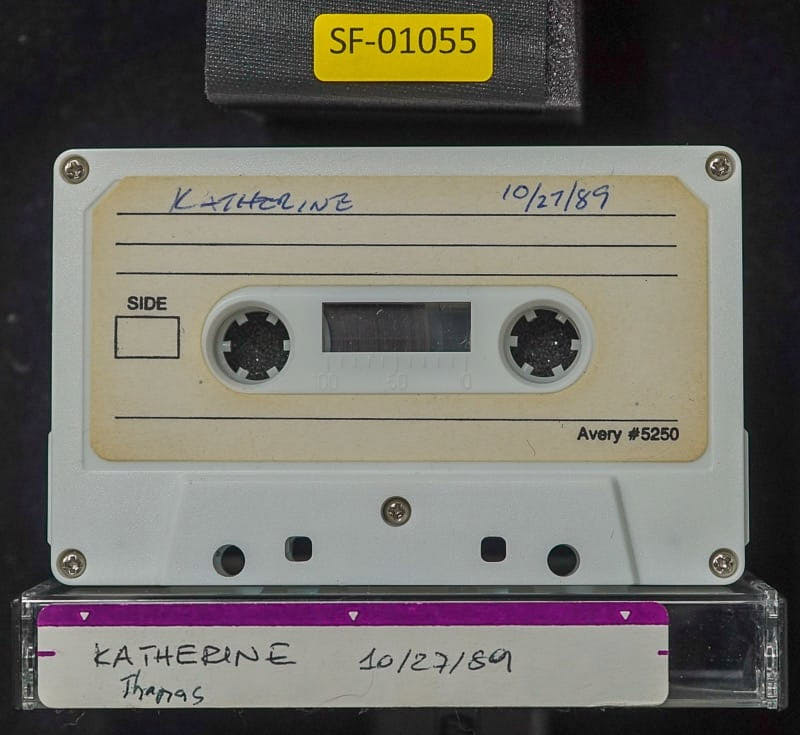
Speaker: Katherine Thanas
Additional text: Avery #5250
@AI-Vision_v003
Then I gave this picture to me that I have not picked up, so... Many of you read the same item I saw in a newspaper about the new t-shirts. Thank you for not sharing where you were when the earthquake hit. And I appreciated this because, you know, every once in a while it got to be too much.
[01:09]
And I mentioned this to somebody. And he said, oh no, we should put out one. It says, thank you for sharing where you were when the earthquake hit American Therapeutic Expressive Association or something. There was obviously two points of view of whether we've talked too much about it or whether we need to continue talking about it and sharing our experience and integrating our experience and including each other. what we have been through together. So I was thinking, well, which way shall I go this morning? And have we already passed that line where people are a little saturated? I noticed on the newspapers and TV, it's a little bit like everybody wants to get back to normal now, and the headlines are a little different, and the news, you hear something else besides
[02:16]
But I need to share with you, I need to continue working myself with the issues that came up for me in the past 10 days or so. So I think this will be some of both. I found, I happened to be on Highway 17 at 5.04. Pretty close to the episode. And the thought that came to my mind, you know, I was suddenly in an altered reality. How did I miss it?
[03:18]
But I'm just knowing how I got here. Wasn't I paying attention? Had I fallen asleep on the highway and I suddenly woke up and my tires were all flat and the trees were shaking and the leaves were going and I couldn't control my car. And I was gradually being moved over to the right. And I knew I didn't have any control of my car. Even though I was still hanging on to the steering wheel and acting as if I did. And the thought, I wasn't afraid for some reason, but the thought that came into my mind was, how did I miss knowing how I got here? You know, the work in Buddhism is to be aware, to be present, to know the transition, know the moment and the transition. Anyway, I was glad that that was my thought. How did I get here? And this thing was interesting, I'm suddenly in a type thing.
[04:20]
And now, two days later, two days after that, my thought was, how do I stay open to what happened to my experience? How do I not slip back into life as usual Ads on the TV with the quality of voice a fan The quality of voice just from the Newscasters the reporters who had been on the radio for a day or so and telling us where the Red Cross Shelter was. I was down in the crime area telling us where the Red Cross Shelter was and that power coming on it and where gasoline stations marked through the world.
[05:28]
Just in helpful information. And suddenly, as things began to get back to normal, there was an ad slipped in. And I thought, yes, that's how we usually live talking about each other, talking with each other from a very deep place. And it's the teaching of Buddhism that whatever happens is reality, is truth. The earthquake is truth, as we all know. There's truth in the material world, and our experience of it is a very deep truth, very deep truth. And the opening, the very deep opening that we felt with each other, and the accompanying fatigue,
[06:46]
so many of us experience it. It's an important truth to fully know. It's also the teaching of Buddhism that you can't hang on to anything. If we try, we're always trying with our minds to capture something that we like about our life or about ourself, our experience. and to reject what we don't find so satisfying. Truth is all of it. Truth is what has happened and is happening, whether we like it or not. And we create a suffering for ourselves by choosing, picking on choosing and rejecting and accepting, grabbing, identifying, preferring.
[07:56]
Dogen Zenji, our patron saint, the Japanese teacher who brought our tradition from China to Japan, who left us a tremendous legacy of very profound teaching. It's set in something called the Ehei Koso Potsu Gainon, the vow of Dō Kintanji. I vow with all beings, from this life on throughout countless lives, to hear the true Dharma. And upon hearing it, let no doubt arise. So what I want to talk about a little today is hearing the true Dharma.
[09:01]
And it's not easy to hear the true Dharma. And staying open to listening. always staying open to listening. And I think that's the way of talking about integrating what's happened, that doesn't hang on to it, that doesn't try to, okay, now I'll try to keep remembering where I was at 504 and how it felt. I'll try not to forget that, so when I get irritated and angry, and rushed and anxious. I'll still remember that and I'll be a nice person and open again. We don't function like that. Trying to do something like that denies who we are in the moment, in the arising of reality now.
[10:10]
So, I can't hang on to 504. Aren't those 15 seconds interesting? Those 15 seconds we'll never forget. How many other 15 seconds in our lives are so vivid for us that we won't forget them? Not for many. Not for many when someone is dying or has died, but some of us gotten it, but we have gotten it, same diagnosis at the end. something that really stops the small mind's obsession. It's interesting, isn't it, those 15 seconds? We won't forget. In fact, we can't hang on to them. They're there. They're already part of our body.
[11:12]
They're not in our mind. They're in our body. So how do we make these 15 seconds, how can we find ourselves listening to the true Dharma in each 15 seconds? And it's work. We'll be fatigued a little bit, I think. Because part of us wants to close it off and get back to our unconscious way of being. Everything's on automatic. You don't have to think. It's automatic. But the vitality, richness, and authentic knowing of our life that we experience at those 15 seconds is something we want to stay with.
[12:16]
in those requests wants to live from it. By the way, I've heard a couple of stories that may interest me. I've got my sharing t-shirt on there. There were three young men surfing off the shore at Aptos. And they noticed that there were three dolphins that had come and were in the water next to them, kind of hanging around. I think that would be helpful. They had a sense they were being protected by the dolphins. And there's someone else down in that area who has the habit of writing, whom he works at the university, and he rides his bicycle down the campus which is on the hill.
[13:17]
And there's a place where he stops and just enjoys scenery. And from this place, you see the city and the curve of the coastline all the way down to the Monterey Peninsula. And it's quite beautiful and he enjoys just looking at that. And last, on that Tuesday, that's where he was. He just stopped when the earthquake hit. And he said, everything began to move. All the hills and buildings and the trees and the leaves, which normally you only see one side of the leaves, trees, they were shaking and you saw the underside. All different pattern of color all around him. It was very, very beautiful. And the whole Guista was very beautiful.
[14:21]
So there was terror, there was fear, and there was confusion, and there was some joy. There was some bliss. And in the words of the chant that we do every other morning here, the merging of different and unity, reality is the merging or the oneness of difference, our particular individuality, our particular
[15:25]
independent form and unity, merging of difference and unity, our oneness, our identity with everything. And the truth isn't the oneness side of our independent side, but we're independent. It's true, each of us exists at a particular form. And truth isn't of the ocean, wave and ocean, that we're all one life, the life of Buddha, Buddha nature, absolute reality, truth of interdependence, interconnectedness, the truth that we all felt so profoundly. The truth isn't one or the other. According to the Sangokai and the teaching of Buddhism, the truth is the oneness of our individual life and the common life, oneness, or absolute identity with.
[16:47]
We use a word like emptiness to express interconnectedness. non-separation. We're empty of separate self, and therefore we are full of everything. So using an expression, I vow to hear the true Dharma, gives me a way on each moment to pay attention attention to the Dharma which is both sides. You can't go around saying, oh, everything is one, we're all one, without noticing each uniqueness, the way the universe expresses itself at each location.
[17:49]
Each of us is a location where the universe where all the causes, all the elements of existence arise if something happens. It can be a happy thought, it can be a mean thought. It can be very petty, repetitive. Whoever it is we are, that's what the universe is bringing up at that location. How in the midst of whatever is coming up here, to not forget the side of emptiness, the true Dharma. That happy thoughts are just thoughts, the same way that mean thoughts are just thoughts.
[18:52]
And to let it all flow, arise and pass away, without grabbing the thoughts that we like and without feeling bad and trying to disguise or reject or not notice or feel guilty about the thoughts that we don't like, thoughts that bring up the dark side of our being. nine or ten days after the quake, here we are with this deep memory of a shared experience of dropping beyond limited mind and body into a communal experience, really talking to our neighbors. You know, the idea that this is a global village, I think Marshall McLuhan said, maybe you have made this a global, the world a global village.
[19:57]
You know, we are totally dependent on each other. I had a new muffler put on my car yesterday. Somebody had to make that muffler and somebody had to weld it and somebody had to pay the, build the building and pay the rent and hire all the people so that I could drive in and buy a new muffler. And normally, we take for granted that we have these functional relationships with each other. I have a piece of money and put something on my car and exchange a piece of paper and that's it. And for many of us, we've gotten so used to the anonymity of the big city life that we are only in touch with that functional the role aspect of our relationship.
[21:03]
But we've known now that touch the heart someplace deeper than the role that we are in our lives. That each of us is an expression of absolute truth, absolute being. Absolute truth in nature. Each of us, we say, Absolute brutal. And when we meet each other from that place, which we have done, we've found some deeper satisfaction. We know some deeper satisfaction. I sat with a small group and came out, and the night of the quake, somebody said, we didn't know the dimensions of the quake at that time at all, that there they were sitting by candlelight when I arrived.
[22:23]
And after we talked a little bit about the quake, somebody said something about, what do I do about my mind that's always thinking, anxiety? I know I'm not supposed to be thinking, but I'm always thinking. And it's not exactly that we're not supposed to be thinking. Thinking here is a metaphor for the expression of our individual, separate self. But that, when thinking is happening, we should know practice with. You know, the other side of thinking, which is that while we're sitting in bed and thinking, there's also not thinking going on. And that not thinking is what was going on among us after the Earth.
[23:33]
It was a kind of not thinking. connection. Regardless of the thoughts, there was something beyond the separations of our normal mind and body. And Suzuki Roshi has a very beautiful way of talking about this that I found helpful. He says, When you find it difficult to stop your mind while you're sitting, and when you are still trying to stop your mind, this is the stage of form is emptiness and emptiness is form. But while you're practicing in this dualistic way, more and more you will have oneness with your goal.
[24:36]
When your practice becomes effortless, you can stop your mind. This is the stage of form is form and emptiness is empty. To stop your mind does not mean to stop the activities of your mind. It means your mind pervades your whole body. Your mind Follows your breathing. With your full mind, you form the mudra in your hands. With your whole mind, you sit with painful legs without being disturbed by them. This is to sit without gaining an idea. At first, we feel some restriction in our posture. But when we're not disturbed by the restriction, we have found the meaning of emptiness is emptiness in form.
[25:46]
So when we're trying to hold on to 10 days ago, trying to be one with what, trying to see the emptiness, contact with people, trying to see the absolute in each person, that's dualistic. It's a good practice. We have to do it. But it's a little dualistic because we're trying to do something, we're making some special effort. When we're just in the activity without trying to convert it to something else, we're just meet whatever happens, if we have an ugly thought, we have an ugly thought. If we have a beautiful thought, we have a beautiful thought. If we have a beautiful feeling, that's a beautiful feeling.
[26:49]
If we're self-centered and angry and rejected, we're just totally in that. That's the stage of form is form and emptiness is emptiness. And that's when we're just in each moment. We go through form is emptiness in order to get to form is form. You must be true to your own way until at last you actually come to the point where you see it's necessary to forget all about yourself. We can't force ourselves to the point where we see that it is necessary to forget all about ourselves.
[27:51]
But we can make our clearest and best effort to listen as deeply as we can to the deep resonance of the Dharma, to hear the true Dharma. In the true Dharma, for many of us, for many years, is hearing small mind and behind it, big mind. Small mind, self-centered view of reality, and big mind, reality are not attached to small view. You know, another way of talking about this is like karmic self and dharmic self. There's our karmic self. That's what I've been talking about. Small mind that thinks it's driving, that has plans for itself, and has direction, and has goals, and wants to do zazen in order to get someplace, get something.
[29:08]
And dharmic self. It's the arising of phenomena without the label of need or worth. Even though Catherine is arising the phenomena, Catherine is just a location. It's no different from any other location, which the diamond is right. And we can only, we only really can be with each other completely, totally, without injury when we meet in our dharmic nature, dharmic self.
[30:13]
When we meet in our karmic manifestations. And by the way, these happen simultaneously, just to confuse the puzzle a little. Karma and dharma arise together. They're not separate. Same you went from the point of view of karma, from the point of view of dharma. When we look at it, when we see our life karma, we see obstruction and hindrance and difficulties and problems. And we see that we can't quite communicate. When we see from dharma, when we meet from a place of no self, non-attachment to our point of view, our perspective, our emotional reality, our truth,
[31:21]
Just mute. No hindrance there. No obstruction. Complete meeting. The Urging of Difference Immunity says, the mind of the great sage of India is intimately communicated between East and West. Dhatamuni Buddha, intimately communicated. His mind intimately communicated. Her mind intimately communicated. between India and China. That kind of communication, intimate, no gap communication, no self, got in the way. Nobody tried to say to somebody, get this. Those minds both experienced reality, fully in their own location. Same reality. slightly different locations.
[32:24]
And we know when we're coming from that ground of reality, not attached. When we're with somebody who's very sick or someone who's dying and we're just putting ourselves in the place to help the person and to breathe with the person without any idea of helping or being useful or trying to feel good about what we're doing. Just being in that place, that's a case of no self, Dharmic relationship. When we join our breathing with someone else's breath, that's Dharmic relationship. And it's not so easy. And that's incredible because it has layers of resistance and ego to burn down.
[33:36]
With this activity of hearing the true dharma, the truth of our absolute and make the absolute truth, meaning, person, true expression of the universal energy, the universal life. When we know each other, and know ourselves in that vibe, some very deep satisfaction, very deep satisfaction, And there's some deep necessity to do this work, deep necessity, to meet ourselves and each other in this way.
[34:50]
Not just because you live an earthquake country. Earthquake countries are wonderful times, but we practice in physics. In practice, it's right now in Iowa or wherever the earth isn't shaping. Like a Roshi once said that we should always walk as if we weren't sure our foot would land. We weren't sure where the ground would be. I thought of that. That was pretty good. That we should meet our life not knowing most obvious, right? Not being so sure. Not being so confident or so safe, so predictable. And when we meet each other, not knowing who each other is, not knowing who we're looking at, our life becomes more vivid.
[35:59]
The lead turns, it's the underside of the lead. And the dolphins are swimming all around. I never know how to end my job. Thank you very much.
[36:21]
@Transcribed_UNK
@Text_v005
@Score_84.67