You are not logged in. You can log in or create an account to save favorites and join collections. more info
Talk on Chiji Shingi

The talk delves into the Zen teaching of Chiji Shingi, focusing on the practice and enlightenment experiences of Zen masters such as Butsugen Zenji and Chikwan Shikei. It underscores the idea that the nature of questions and experiences in Zen practice does not change before and after enlightenment; instead, it is the practitioner's perception that transforms. The discussion also touches upon the role of Zazen in opening one's eyes to the true nature of self.
Referenced Works:
- Chiji Shingi: Examined as a foundational Zen concept, emphasizing consistent presence and consciousness in life, both pre- and post-enlightenment.
- Dogen's Commentary: Offers insights into Zen master encounters, particularly highlighting the significance of experiential perception shifting with enlightenment.
- Butsugen Zenji's Teachings: Illustrate the futility of seeking unnecessary competition and stress the imperative of understanding one's own existence.
Referenced Figures:
- Butsugen Zenji: A pivotal Zen master, referenced for his teaching on the futility of superficial inquiries, encouraging deeper understanding.
- Chikwan Shikei: Discussed in relation to personal enlightenment journeys, reiterating the sameness of profound questions across time.
- Dogen Zenji: Cited for his admiration of the encounters between great Zen masters and his contribution to the understanding of the Zen path through commentary.
AI Suggested Title: Perception Transforms, Not Zen Questions
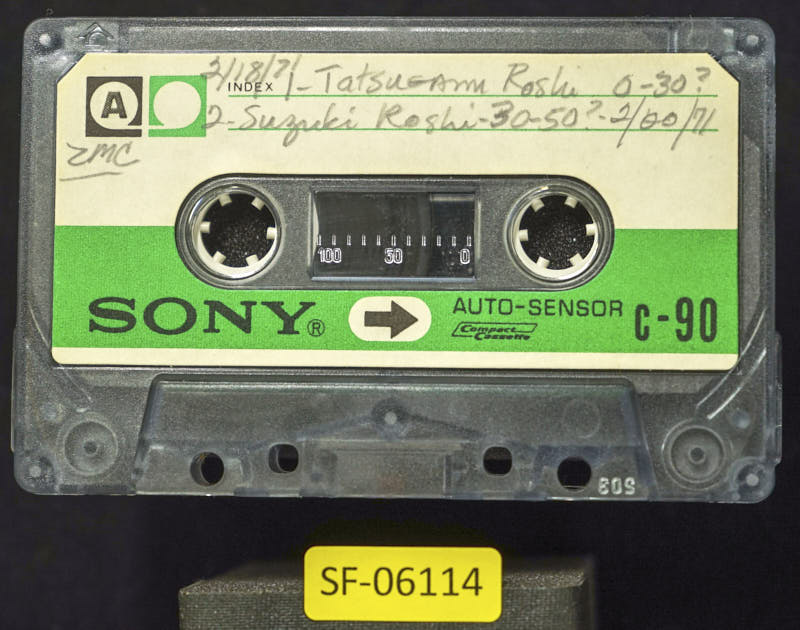
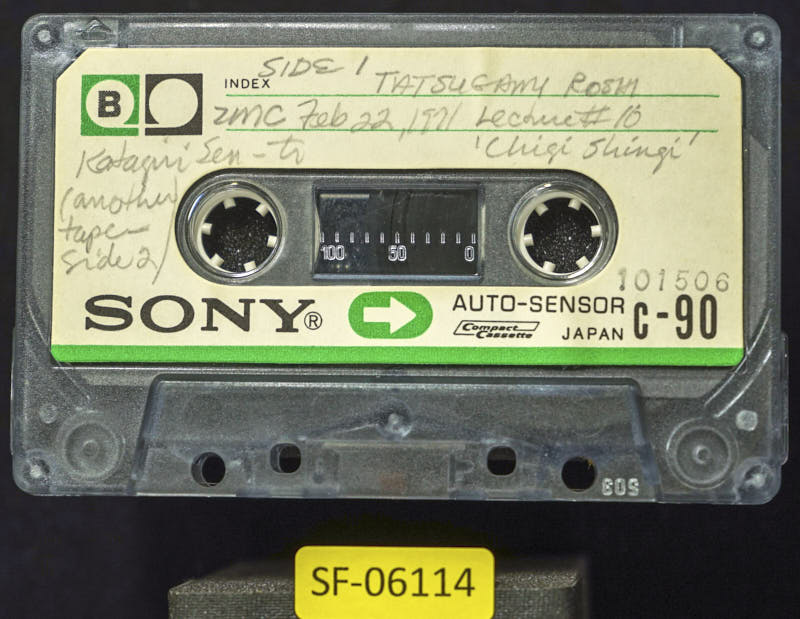
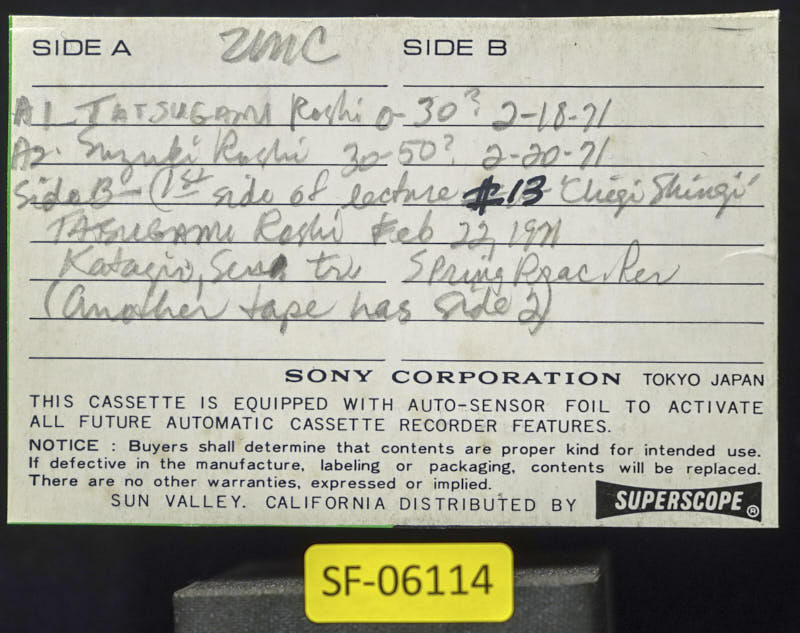
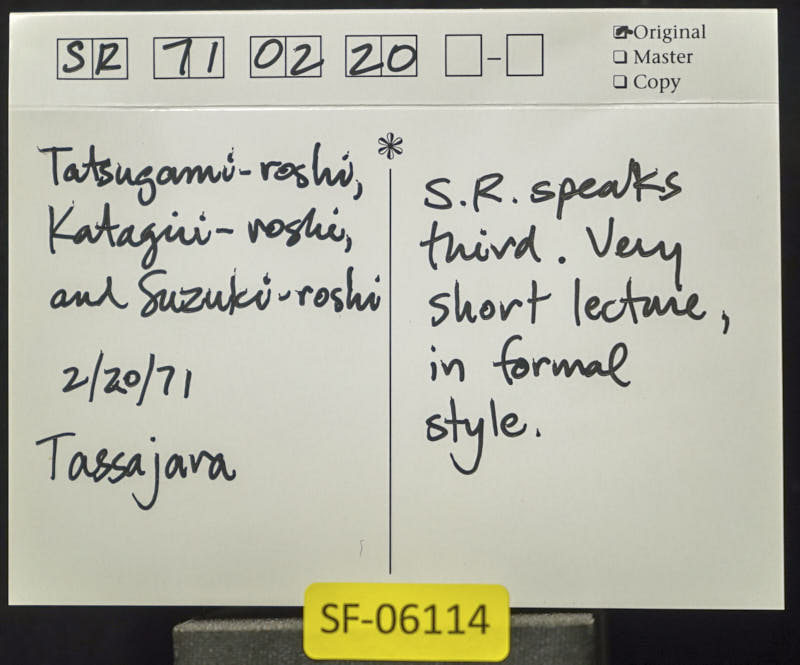
He said he [...] said He said, he [...] said, It's not easy.
[01:06]
It's easy. [...] more than to be used to be a part of that, to be said. What is the word? [...] You know, you know, you know, you know, [...] you know,
[02:29]
What is it? [...] You said, you said, you [...] said, That's why human beings are alive.
[03:32]
That's why human beings are alive. [...] That's what I'm going to say. That's what I'm saying.
[04:34]
That's what I'm saying. [...] So, it's different. So, this is one of the things that you can think about. You can see what's going on. [...] So, when I was born, I was born in the beginning of the camp of the camp.
[05:39]
I was born in the village. [...] I was born in the village of the village. I was born in the village. So, when I came back, I thought I was going to come back to me. And then I was going to come back to me. And then I was going to come back to me. And then I was going to come back to me. [...] I was going back to me. It's a little bit smaller than I thought. It's a little bit smaller than I thought. It's a little bit smaller than I thought. It's a little bit smaller than I thought.
[06:45]
It's a little bit smaller than I thought. [...] The father of the king of the king of the king of the king of [...] the king of the king of the king Therefore, the fact is that [...]
[07:58]
That's what I'm saying. [...] This is the principle of the principle of [...] the principle Well, you're not going to say anything.
[09:05]
You're not going to say anything. [...] Now, I'm going to talk about this. Now I'm going to talk about this. [...] He is the one who is the one who is the one [...] who is the one who
[10:23]
So, I'm very proud of him. [...] There was one of the most powerful, and the most powerful, and the most powerful, and the son of the弟子. And so, this is the best person, and [...] the best person. What are you saying?
[11:27]
What are you saying? [...] So that's what he said. That's what [...] he said. So that's what I'm talking about.
[12:29]
So that's what I'm talking about. That's what I'm talking about. I'm talking about it. [...] But if you have such a view, it doesn't matter. If there was a hole in the hole, there was a hole in the hole, and the [...] hole in the hole. That's what I'm trying to do.
[13:55]
That's it. [...] I don't know what to do. I don't know. What?
[14:58]
What? [...] That's right. [...] For example, the law of [...] the law
[16:19]
No, no, no, no, no, no, no, no, no, [...] If you don't read a book, you can't read it. But that's why it's true that your body, [...] your body.
[17:46]
And so, in this place, like this person, like this person, who has become a man [...] who has become a man. He said, he said, he said, he said, Once again, Zenji visited Chikwan Shikei's room at night without any notice in advance and asked again
[19:52]
the same question of Chikwan Shikei Zenji. That question was, what should I do, what should I do when there is nobody whom I am about to compete with. But at that time, Butsugen Zenji said, Kan Kago, literally meaning the futile talk. Plainly speaking, it means that Bhutan Zenji wanted to tell his disciples Chikwansuke, what the humbling, humbling, what the humbling you walk, you are walking.
[21:21]
In other words, what are you grumbling at? You haven't yet, you haven't yet understood the answer to the question which you asked, you have asked, you had asked. Don't take waste time to concentrate on such things. Then at the last, the Butsu Genji said, I have nothing more to say to you. I have nothing more to say to you means, if your eyes open, it is natural that you can understand the question which you had.
[22:56]
Uh, what, what he had asked. Uh, what you, what, uh, Chikwansuke. Zenji didn't understand is as if a monkey concentrated on rolling. as something like a ball.
[23:58]
Life is going on constantly without any room to be inserted. into anything. Life is constantly going on without ceasing. Chikwanshiki asked the same question of Butsugen Zenji before he had attained enlightenment, after he attained enlightenment.
[25:46]
There is nothing but the presence of just the same questions before and after she attends enlightenment. As mentioned before, the question is, what should I do when there is nobody with whom I am about to compete? In other words, simply speaking, what should I do in the domain of the Absolute?
[26:54]
Chikwanshiki asked the same things before and after. And Butingen says, I have nothing more to say to you. It means the question itself is to make you to make a Shikezenji, Shike, Tikuan Shike, are going around, around repeatedly. In the same place, as if a monkey concentrated on rolling something like a ball.
[28:23]
To have a question is to make some room to insert into your life. Life itself, as mentioned before, is going on constantly. without inserting anything at all. Insert anything into it. Into the stream of life. From this point, everything is completely alike, completely alike in its inherent quality.
[29:56]
Before you attain enlightenment or after you attain enlightenment. But there is different things but there is different things which make you make you have different viewpoints before and after enlightenment. For instance, there is a very big a Buddha statue
[30:57]
I don't know how much, how much high, how tall, how tall it is, means that the same high as that of two mats. Nijo Rokushaku is the same height as three mats, that of three mats. It's a very huge Buddha statue at my temple. There was the Reverend Kizang Honda who took charge of the post of cunning in A.H.
[32:26]
Monastery who was born in the same village same village as my temple is located at the place where my temple is located. Sometimes whenever he went back to went back to his native home, native country. He made it rude to have visited my temple without fail. One day he said to me,
[33:32]
That Buddha statue was... No... Was... No, excuse me. When I was... When I was... The... grade school child. He thought that Buddhist statue was completely huge. But when he visited my temple, After he's grown up, he thought the Buddha statue is smaller than that when he had seen it at the age of, at the childhood, his childhood.
[35:06]
Then he asked me, did you fix something on the Buddha statue? Because for me this Buddha statue is smaller at present than after his childhood. In this respect, with the preceding of age, it leads you to have a different viewpoint wherever you see.
[36:32]
Whenever you see the Buddha statue at my temple, In his childhood, the Buddha statue, he saw Buddha statue becoming small, becoming huge. But after he's grown up, Of course, the appearance of the Buddha statue seems to be smaller. But the contents of the Buddha statue is getting bigger with the preceding of age.
[37:48]
Then, as mentioned before, everything is completely the same before and after the attainment of enlightenment. But differences depend on contents of your experience, whether your eyes are open or not. Through this experience, whether your eyes are open or not. you will have a different viewpoint in life, in the world.
[39:09]
Then the purpose of Zazen is to make you open your eyes. To open your eyes. Which means to reveal the to reveal the nature of the self. This is the purpose of the Zen. Next is the commentary given by Dogen upon this story. Butsugen was one of the greatest Ho-yen's disciples. I think that it was a great opportunity for Chikwan Shikei Zenji, partaking, partaking of the spirit of Zen Buddhism, patriots had followed, to have
[40:27]
undertaken the responsibility of Yino. This is the Zen master, what is now called Kozan. He had a great reputation for explaining or criticizing the sayings and doings of enlightened Zen men. There was no man, no one comparable to Chikwan Shikezenji. of Hoen Zenji, who was the abbot of the temple which is called Mount Goso.
[41:40]
As the Wigin Zenji says, I think that it was a great opportunity for Chikuwa Nishike, the taking of the spirit of the Dhamma patriarchs had followed to have undertaken the responsibility of Yino. The four Dogen Zenji, how great, how great this opportunity they win the Chikwanshike and Butsugen Zenji encountered is because a great man encountered a great man who have been about to
[42:56]
and taking the responsibility of the Inno. So Dogen Zenji admire this opportunity saying how valuable it is. The great Zen master Chiku and Shike practice very hard and the great Zen master which is called, which was called Butsugen Zenji. There is no rule, no gap between two. Even, there is, even nowhere, even though, even No wind.
[44:02]
@Transcribed_UNK
@Text_v005
@Score_25.9