You are not logged in. You can log in or create an account to save favorites and join collections. more info
Embracing Suffering Through Zen Practice

The talk focuses on the theme of embracing suffering through Zen practice, emphasizing that both practice and suffering are deeply intertwined in the lives of practitioners. It is argued that efforts to alleviate suffering may not be the primary outcome of Zen practice, but rather a deeper understanding and acceptance of suffering itself. By engaging in shared life experiences and connecting with others, practitioners can find value and purpose in their ongoing struggles.
-
Karagiri Roshi's Lectures on Gyoji: The importance of sharing life and practice with historical Buddhist figures is highlighted, which signifies the universal connection in the Zen practice journey.
-
What the Buddha Taught: Refers to the idea that even states like samadhi are transient and form part of suffering, challenging the belief that enlightenment or specific states of mind can alleviate suffering entirely.
-
Lectures by Suzuki Roshi: Cited to illustrate that suffering is a constant aspect of life, reinforcing the notion of accepting rather than resisting or trying to transcend suffering.
This talk implores listeners to accept suffering as an integral part of life, urging a reframing of practice not as a means to escape suffering but as a pathway to embrace and share it through Zen.
AI Suggested Title: Embracing Suffering Through Zen Practice
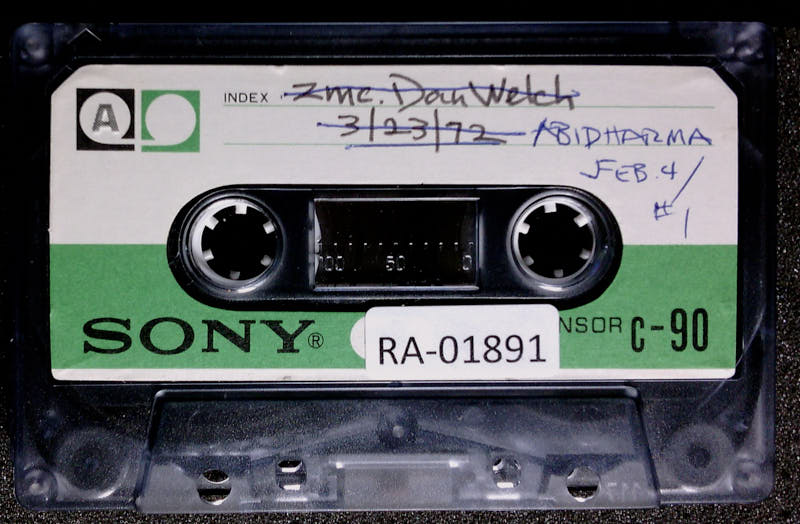
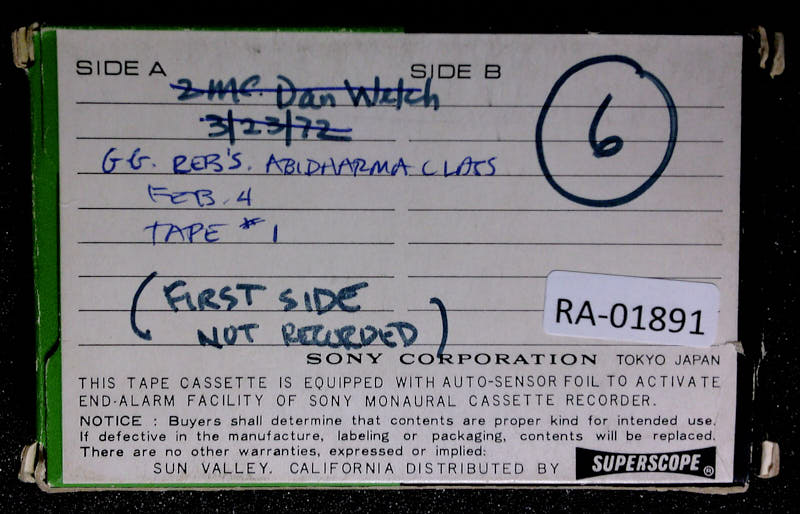
As you may know, today and yesterday, several of us have been discussing your life And presume that maybe all of you, or most of you, some of you, have some sincere and deep question of what that is all about. Who are they to manipulate my life? One of the lines, or one of the sentences, one of the phrases from Karagiri Roshi's lectures on Gyoji said something to the effect that our practice
[01:49]
best effort is actually sharing our life and death and our study and practice with all buddhism patriarchs that all buddhism patriarchs may sound funny or extra It may be the same to say that each one of us is sharing our life and death, study and practice, shortcomings and virtues. And how we do it, no one really knows.
[03:06]
How we share our life and death, studying practices beyond what we can describe. In a talk I had with a student the other day, we were talking about suffering. And the idea came up that we practice Buddhism to help us alleviate suffering. more we suffer, the more we want to practice, or the more intensely we suffer, the more hard we'd like to practice.
[04:18]
I think that's true, but I think that may be only a part of in that even though we practice hard, and even though we attain some samadhi, you know, as I was in, which I haven't got the faintest idea of what that is. I don't think, all in all, that anything we can do actually alleviate our suffering.
[05:39]
But still there is something that we are doing. or that we can do or there is something that our teachers, gurus and patriarchs say, have said, demonstrate with their lives that offers offers something I think the more we practice zazen, practice the way of the Buddhism teacher, I think it's pretty universal to say the more we see or feel intensely how deeply immersed in suffering we are, or how entangled we are in the worlds and realms of greed.
[06:57]
anger, hatred, self-delusion, egotistic clingings. And I think that our trouble intensifies adding snow to piles of snow. When there's desire to eliminate and alleviate and get rid of that kind of suffering. I was also asked by the director and others to say something about now, about this time of the practice period, to say something to wake us all up, to not let our practice get too silly.
[08:38]
be pritted away in some kind of delusive fantasies about what's going to happen after practice periods over. Last, more than a year ago, one of the shisos in a very dramatic sort of I think it was during the insomnia. He got up from his cushion and grabbed the wake-up bell and started ringing it. He said to everybody, wake up. But today, anyway, I haven't got the heart wherewithal to come up with something so original and dramatic. And actually, I think what I feel personally is that I feel very, very, very good about what has been going on in this practice.
[09:57]
Nevertheless, the practice period is not over. And no matter what we think, no matter how certain we think what's going to happen, 99 and 99 one-hundredth percent of possibility of its happening is likely not to happen, except in the fact that we're going to die. So I think, anyway, the most important thing is to continue to care for without expecting too much and being open to the many changes as they present themselves to us.
[11:56]
I don't have much more to say tonight. Somebody would like to throw something in. We can toss it around. Or we can finish theming out in Zazen. Yes. that you have, quote, the greatest idea of what samadhi was. But I think maybe you probably get that some ideas or thoughts about samadhi. And it's a curious point for me because there's, what I usually experience at best, just sitting there, doesn't seem to me. And samadhi, the other thing I've always seen to my read, When I was sitting in the Rinzai temple that I sat for a few months in Shpian, there was a lot of talk about Samadhi, about
[14:00]
reaching a state of Deep's mind and how important it was. In trying as I did, I never could come up with anything that even approached the way they described what that is all about. It hasn't gotten any better since I've been at Tata Ha. I like to say things that you read about in books. You know, I think... I really haven't thought about it much hardly at all, and I was surprised when someone mentioned it to me just the other day. He was able to enter Samadhi pretty readily. I said, well, the president, I just... who could get there. But... Somewhere I read... I think it was in a book called What the Buddha Taught.
[15:07]
I think it said something to the effect that even samadhi is a form of suffering. Because it's transient. And I was very moved by that. But even though we... Somehow, to me, that it was important as something, anyway... Just reading that, it eased in my mind something that I felt before that I had to get. After reading that, I thought, well, it's good. It just comes and goes like that. Maybe I don't need it. But I think an interesting, or to me, an interesting point in that is there's really, to reiterate, Nothing we can do. No state enlightenment or whatever to alleviate.
[16:20]
The incessant arising of tingly greeds, angers, and fallings. One thing I was delighted to hear from Suzuki Wilson was, I think the last lecture, one of the last sashims that he gave it to someone. He said that it was during the middle days of a sashim, the most painful and sort of agonizing time of the sashim, he said the suffering that you have now, that you'll have forever. And the way he said it, and the time that he said it, just in his inimitable way, he slammed some funny, clear, diamond-like truth out in front of everybody.
[17:27]
Because I think everybody was really thinking something to me. Everybody, I think, shared emotionally. And most everybody laughed or responded. But that struck me in a way similar to that reading that thing about Samadhi, some great state of mind. Rather than trying to figure out, arrive at some way to get out of the situation of our life, is to see it and relate to it, and to actually share these difficulties with each other. And I was moved by that sentence from my Goji, although you know, kind of be where she was speaking of, of our sharing it with each other, or sharing it with oneself, and allowing oneself to experience it, and not try to get out of it, is...
[18:44]
some kind of mainstream and mainstay practice. In these talks that the officers, Yvonne and Will Richmond and Niels and myself have been having the last two days, as we look at the situation of Zen Center in Tatsahama, your life, and how it's inextricably bound up in my life, our lives, it never fails that these aspects arise. And rest assured, rest deeply assured, that those people who are considering
[19:46]
whether you stay on it does a harm, what is insane. Rest assured that they are not beyond greed, anger, and self-delusion. It's very interesting, those talks. There's a similarity between the intensity and the degree of involvement in those kind of talks we've been doing. We had to work with changing meetings and Zen Center officers meetings and board meetings. I wish
[20:49]
I wish there was some way I could probably share with you now, convey to a talk, what they are. But somehow, I don't think I can. And I think, on the other hand, I think maybe some of you, I was glad to hear what I think it was Todd said last night at the end, you know, it looks like people always feel bad about the officers that sometimes they say that it is now or something. Anyway, I think without going into all the little details of what come up again and again, anyone who's interested, I think, can talk about it. You can't be interested. But I think the... I think merely just our sitting together, practicing in this way, whether we feel close to one another, or we feel some kind of anguish, extreme difficulty living with one.
[22:21]
Whether we go through all those changes back... Do you have any other questions? Oh, Larry. I think I was suffering at some point. What if, uh, kind of here was his back to us. I'm talking about point on the truth. But when I get out of their life, the last week, you know, there's an acceptance. You don't understand what you mean.
[23:35]
Well, I'm trying to leave you asking the latter, but I'm not really saying you want it or not. Maybe you could say a little bit more, because I don't quite see clearly your question. . And it was none? You know, one thing that I've been
[24:52]
in or trying to talk about during my, all the lectures that I've been given has been in the heart syndrome and what we, you know, we say it every day. I don't know how If any of you anymore hear what we say, sometimes, many times I find I don't say it. It's just a trick song. But every once in a while, one of those phrases will come out and tap me on the air. There was no suffering, no end of suffering or something.
[25:56]
@Transcribed_UNK
@Text_v005
@Score_77.83