You are currently logged-out. You can log-in or create an account to save favorites and more. more info
Dharma's Journey: Zen Transmission Unveiled
AI Suggested Keywords:
The talk focuses on the concept of Dharma Transmission within the Zen tradition, detailing its historical significance, process, and spiritual implications. It addresses the rarity and sensitivity of Dharma Transmission, explains the symbolic practices involved in this tradition, and highlights the challenges faced in modern implementations, especially within Western contexts. The discussion concludes with reflections on personal growth, recognition, and maturity as essential components of the Dharma Journey.
- "Zen Mind, Beginner's Mind" by Shunryu Suzuki: This foundational text is emphasized as a cornerstone for understanding and practicing Zen, outlining the essential attitudes for a beginner in Zen.
- Buddha's Flower Sermon: Referenced as an example of the original simplicity of Dharma Transmission, embodying the essence of understanding without words.
- Koan of the Chicken and Mother Hen: Used as a metaphor for timing and the mutual effort required in achieving realization or Dharma Transmission.
- Historical Dharma Transmissions: Mention of Suzuki Roshi's transmission highlights the significance and the challenges faced in preserving authenticity in this practice.
AI Suggested Title: Dharma's Journey: Zen Transmission Unveiled
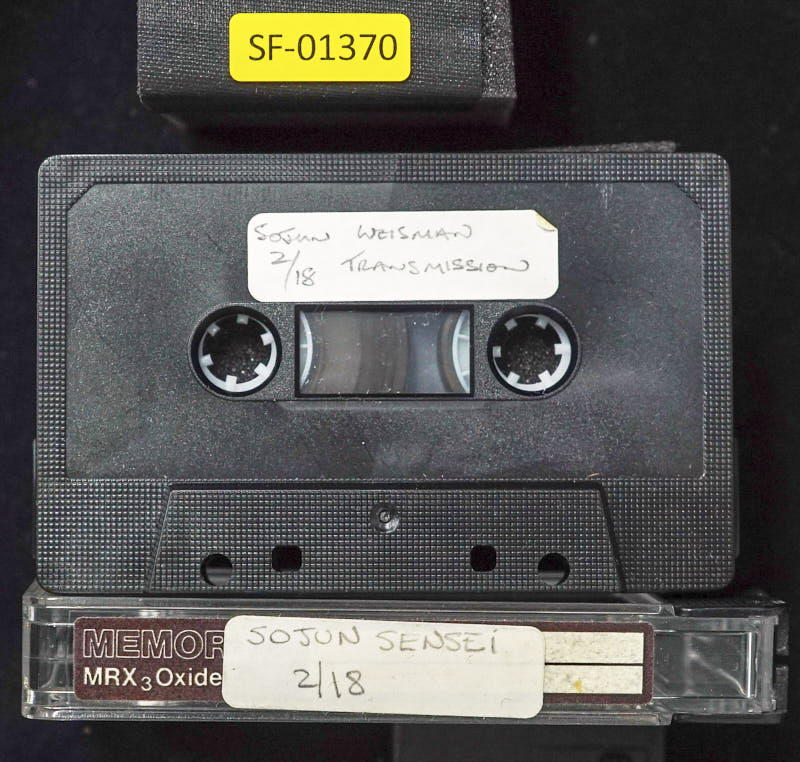
#BZ-round3 - unidentified speaker on side B after end of first talk
Thank you very much. three weeks, this particular period, and then I was like, just in the last three weeks.
[01:20]
But it's not unusual, whatever you're doing, you're doing. So it was very intense, very intense time. I want to explain to you, some of you know, of course, about this, but I don't know what the question is. for a priest. The first stage is coordination. Where a person becomes a novel priest. And the next stage In the first stage, they shave their head and put on hips.
[02:30]
And they're not happy to breathe. The second stage is where we are head monk at a training grade. That's called Shiso. And the third stage is called Shiso, or Don, because she's where you become a full priest and operate to act as a full priest. And you have to get on the ground. And at that point, it's possible that suddenly there's a temple. And teaching them you become a holder of the language.
[03:53]
Darmic transmission has been rather rare and sensitive. Darmic transmission has become rather rare and sensitive. Darmic transmission has become rather rare and sensitive. When Suzuki Roshi, just before Suzuki Roshi died, he gave Dharma translation to Richard Jacob. And it started Dharma translation with Bill Kwong, where it had to be Siddhartha Nabi. But that was never completed. Two years ago, Richard Baker came and got my transition to that issue for this. And I received my transition from the three-directional sun, and there were columns of [...] my transition from the three-directional sun.
[05:12]
you see that the translation is wrong, focusing. So now in the beginning, I'm catching things in itself, I've given down a translation to these people. So it's kind of a wonderful event that this is beginning to happen. Japanese priests who did Donald Transmissions were Americans, but American priests who had been Donald from their country.
[06:19]
Donald Transmissions, if you look back at the history of Zen in the platform search of The sixth picture of it. The sixth picture of it. The sixth picture of it. The fifth [...] And that's completely enclosed. I mean, Buddha held up a flower in Mahakushalayasana. That was Dharma Transmission. Dharma Transmission was no longer that simple. It used to be quite simple. During the Zangara, in Buddhist time, it was quite simple. Buddhists would just say, follow me.
[07:24]
And you became a member of the Zangara. Buddha had a flower, not a Shepard smile, and that was a Dharma transition. This holding a flower and a smiling is actually a Dharma transition for all of us. So a Dharma transition is something that happens naturally. And then to acknowledge that we have assembly, It's the ceremony of acknowledging it. I think Yoshi talked about drama transition as not some event that where something has passed from in person to another, but because something is out of the time, the acknowledging
[08:35]
what if you want to be free? And do you want to be free? Because you're already practicing the free. It's a very easy field in this free. The road naturally comes to you. In God's transmission, it's not that there's something given, it's something you see. It's like two vessels of water, and one vessel can put it into the other. But water is just water. It's not that one cup becomes water. Both cups are already one.
[09:39]
So water flows freely with water. One line is in the court of phenomena. and understanding. Just to account someone's understanding of Darwin's transition to create the Darwinian teaching. In Japan, the way the system is set up and so presented,
[10:48]
the younger children of the temple priests go to the monastery and train after they graduate from high school or college for anywhere from one to three years and then they come home to the temple and they get a Dharma transition and I their teachers and maybe their fathers So sometimes, dharma transmission in Japan is given rather easily. But real dharma transmission should not be given so easily. And Shizukuro should be quite even very trickled with us that it wasn't just a matter of course that we had dharma transmission.
[11:49]
there was some actual meaning, some original meaning. And he didn't want us to follow the easy way of roughly the Japanese. But he waited until he was almost ready to die before he gave some of the other champion. But sometimes it's usually And if a teacher will wake and get down the translation and get fit to one disciple, that's not at all unusual. But ideally, one wants the disciple to be the best that you need. And unusually, someone who's kind of sent or goes beyond the teacher, I'm going to do the Dharma transmission.
[13:00]
I hope it is that the issue of the disciples were building out the teacher, accomplish something more than the teacher. That's something to cope. So it was much more than a good disciple. I talked to some of your issues about it. Sometimes we give it to someone when they're ready. Sometimes we give it to someone when they're ready. And sometimes we give it to someone when they're open. tomorrow, you pass the right, you pass the moment when something should happen.
[14:23]
And if we don't wait one another, someone will be too greedy. So someone will be overwrite, but someone will be too greedy. So doing something at the very moment, and knowing when the right time And that bright moment is important. There's a koan of the chicken, the mother hen taking at the end of the chicken. The baby chick takes from the inside. The mother chick takes from the outside. And just at the right moment, they both together open the shell. That doesn't really happen in your life. It's a good example of doing something together at Berlin.
[15:24]
So I have prepared the language that Dharma can push you. I wasn't sure if he was going to be able to call him. I thought, well, maybe at the same time, but he came to a blind state. I didn't know, so I didn't prepare you to go there. But when you came, you said, let's go. So I canceled out my appointment. And when we got on your fingers in the creek, we went on to talk to Paul and did this thing.
[16:37]
And I think it was just the right time. It was really good for people at Casa Harlan. a little bit, but it was such a beginning that they really enjoyed it. Even though they didn't know exactly what was going on, Dharma transmission is something that's person to person. It's not a public event. It's an intimate event between two people between the teacher and the disciples. It's not exactly secret. It's not secret. But at the same time, it's not something that everybody watches. It becomes like a teacher that's being. So all this stuff was going on, but
[17:44]
If people see what was going on, they would know what was going on. So I thought, I explained a little bit about what was going on. As I said, it takes about, ordinarily, three weeks. And during that time, let me say, before I did that, The future is to tell them one person. And it's very unusual to have three people doing their own transmission at the same time. Something that happens for about 30, 50 years in circumstances. But it's one person to one person. And so we were doing these three ceremonies at the same time. But each ceremony is separate. It's not going to get it all together. But we studied together, and we shared information together, and prepared together, which was excellent, very nice.
[19:04]
And it's been a lot of time together in preparation. And so during this time, everyone and cycle. It's up very early, an hour before later. The way back to Tessahaw is 3.40, so they're going to get up around 2.30, 3.40, and the only altar is Tessahaw. I'm coming to the center. About, I don't know, I think about 10 or 10. Later in the morning, they would offer a champion of each ancestor, and kept a big devil, and Bob would be each ancestor.
[20:07]
And he would do a few questions as a dialogue show. And then I would say, should we do a dialogue show? because we were doing this thing mind-made instead of... And then, when the person has Dharma transmission, they make their own documents. And they have to make them very carefully, and a lot of them, they just read them. And then the teacher had to complete an argument.
[21:13]
And so part of what we were doing was transferring from Japanese into English. I had done my job in Transmission to Japan with Talisa. And I did manage to get it into English, but it was really hard for me to understand what was happening. when you're in the midst of doing something in foreign countries, in foreign language. And very hard. It's just a month to get through to do it. So this time, you can pay more attention to what was really happening, because I would have believed the same as somebody else. But with tremendous amount of work, Each day got a little more intense. In the last two days, there were ceremonies that happened in the middle of the night.
[22:17]
One is a precept ceremony. And the other is an actual drama transmission ceremony, which happened last night. So it should happen. It's supposed to happen at midnight, the drama transmission. And then there's some other little simple things in between. But I can tell you some of the things that happened in the dormitory, which I think are interesting. One thing that happened is that this teacher and the disciple are proud of each other. puts the edge of his dialing map over the dialing map of the cycle. And then they put their dialing map over the edge of their dialing map over the dialing map.
[23:30]
So the first one is a vertical relationship. The second one is a horizontal relationship in which a disciple is on the same level as a teacher. And the teacher acknowledges the disciples And one other important little act is the cycle that you think that's called, where they walk on their knees to seven steps. And this is like becoming a thing. pretty interesting.
[24:36]
The most final optimization is to become like a baby. Not to gain something, but to be about everything. And to become completely new. So, in the lineage, The cycle of being is entered along with all of the ancestors and the new ancestors. And they're called new sons of, in righteous case, new people. all of our stages of automation are to become new, to give up everything, to cut off finance and become a new person.
[25:57]
And the final realization that we have is that moment by moment we give up everything and become The goal is to accumulate things and to gain knowledge. But for example, to give up accumulation and to clear the mind we have a clear mind, not coding, not anticipating anything, waiting for anything.
[27:01]
It's like we should go to the beginning of the mind. And we're just ready to do anything that's So I think that we really need to understand what is crazy, what is practice, and what is our transition. Dharma transition is nearly recognition of our innocent minds. Clear, innocent problems. to give a desire and open.
[28:14]
But when I was in the business of the cabin, I think that this is quite just the first woman Thank you Right now, Black's very happy, and Paul is very happy.
[29:14]
Yes. Can you guess how this sort of change this will affect or change the function of those people's practices in some of your work, how we can relate to that? Well, I don't know how it will change. I can't say. But what you said reminded me of something that I wanted to say, which was that it's not unusual for someone to receive driving transmission, and then the teacher says, Please go away for 10 years. Disappear for 10 years before you start teaching.
[30:36]
Or go away for 15 years. Or go away for 20 years and then come back and teach. Mature your understanding. So Dharma transmission, ideally, that's very good because we haven't, you know, Go mature yourself and then teach. But in our practice, we're resisting. We can't do that. It's not possible, or hardly possible. Because we're such a young, we don't have a lot of mature teachers to keep things going while those people go out and mature themselves. Right away, do something. But it's really good if we could just give them space and never come away.
[31:41]
I mean, that's my opinion. If you think, well, I'm not aware of what they do. Just do something. Breathe. Let's not do anything. Let's just give it give them a chance to get used to this new step. So that's why I don't want to say to them, what should they do, what should they do. But I feel that before long, there'll be the bigger things OK. No? Yeah. And you said that at these stages of .
[32:45]
No. And you could receive . But you can actually do . And according to this system of procedures, they can give realization. The way, I don't know if you just get clear to actually stick to this system, but the way it actually looks is, after dormitory vision, it's possible to become an addict. And after you come and have it, then you can train shoes up with one of their practice tables.
[33:56]
And give Dharma transmission. But someone who has Dharma transmission is my understanding. Someone who has Dharma transmission can give Dharma transmission. But they can't necessarily train the shoes up. So sometimes a teacher who wants the dharma transmission to a student will send a student to another teacher, for example, and have that person be a shuso first under another teacher. It doesn't have a shuso command the person I don't think it always goes by the system. But that's what we have to go with. And then the way to tell you what happens is what we do.
[35:03]
Pre-story. Having a machine punch, which is another stage. So unless we have our habits at the very And the opportunity for people who have fellowship, which is a method, would be that they would have to allow them to start . Someone can invite them to be a temple.
[36:06]
There's a ceremony in Japan where after we have dawn and transition, we go to the head temple, the head monastery, which is becoming Abbot. take over the duties that they have for one day. And that's a kind of acknowledgment of their, um, but it's not the same thing now. It's acknowledgment. But it's not the same as a seven-year-old. Thank you, Eddie.
[38:15]
And the purpose of that is to find your way out. Find your way, et cetera. How is it if there's a person who's ready for God and trying to figure out their way, et cetera? Yeah. Well, I think that's a good question. What is the accomplishment of someone who has done it this year? Ideally, we would say it was someone who was very white. But practically, naturally, it's someone who understands, let me put it this way, who is authorized to practice.
[39:43]
When I say authorized to practice, that practice originates from that person. In most of us, we depend on the factor. We depend on something. We're pulled along by practice. So if you look at it in terms of training, as an example, there are box cars which are pulled by engines. And they go along the track, and they get to where they're going. But they're pulled along. And that's like most of us. But the engine is the one that does towing, or the power originates with the engine. So if someone puts down a transmission, it's like the engine.
[40:45]
And there is realization to be an engine. The engine has a certain kind of realization. They have the practice of which he makes with them. They make it happen. If no one else in the world practiced, that person will feel so confident about that because they understand what it is about. And it comes out of them rather than being brought along by some healthy moments of ideas. So first, it has dharma transition. Shares has confidence, which comes with a certain amount of realization to continue and help others.
[41:52]
And what's really important At some point, the rock star has turned into a nation. So, really, it's a very interactive kind of evening, and it will really be up to all of us together to make this evening rich. When I'm finished speaking and Tanzanin begins to answer questions, I'd really like to encourage you to remember why you came here tonight. We say in our school that Zen is about understanding yourself. Zen is about finding out what am I. So each of us has come here. For some reason, we're on this quest. So we have a chance tonight to ask the Zen Master about our own quest and what's real for us. So again, I'd just like to encourage people to feel free To ask risky questions, take something that's a little difficult to ask and ask that.
[42:57]
That'll make the evening very lively and informative. Just as an opening, I was thinking on the way over here how interconnected Zen Buddhism is in the United States and perhaps the world. When I started practicing about 13 years ago, I started practicing on a very small Zen community in Mendocino that was started by people who left the San Francisco Zen Center. And the first night I got to that community, they handed me the book, Zen Mind, Beginner's Mind, and said, here, read this. This will be your introduction. And I probably read the book about five times within the next two months. And it really became a strong foundation for my practice. And even now, 13 years later, I've been practicing with Santanim for about nine years now. And though the words are often different, the essence really comes through as being very much the same. And just a little bit about Santanim.
[44:02]
He's been in the United States for about 15 years now. He came from Korea in 1972, I believe, and took a flight and ended up in Providence, Rhode Island. And the reason he ended up in Rhode Island was that some People told him before he left. I think he met a professor from Brown University who said that Providence was a hotbed of new thinking in the United States. So he went there, not knowing anyone except this one professor, and set himself up. And he actually got himself a job of fixing washing machines. And that's how he supported himself at the beginning. And then slowly but surely, he met some students from Brown University. They moved in with him in his apartment and slowly but surely he introduced Zen Buddhism to them. Very, very lightly at first. Now we wear these gray robes, but back then there were no robes and people didn't quite know what to make of his chanting.
[45:03]
And part of our practice, a very important part of the practice that we have is doing 108. You need to get yourself through a lot of practice. And take some realization to be able to do that. And then you begin to recognize somebody. This person has got some realization. And then you hopefully cultivate that person's practice. And make sure and change the individual. What is the realization? What is the realization?
[46:13]
That wherever you are, even if you don't know where you are, Why do you need practice to know that? Why do you practice? Why does that propel to practice? It's just the natural reason. You don't need it? It's just the natural reason. The realization of standing that you can stand by yourself and be your light up, illuminate your world.
[48:11]
Hello. We need someone else's light. At first, we follow along under someone else's life because their life is very strong. But then in our life, we become strong. We're just like that other person. And it's not something you can get.
[49:45]
Well, when do you hope to be recognized for knowledge? We need to forget all about it. Then recognition becomes natural. As long as we want something, we all want to be recognized. But if we need it too much, There's something bad, correct about it. But if you really have it, you can recognize it yourself and never be worried about it. And it will be recognized. So what our great hope is that maybe one of us can light up our way for ourselves and for our lives.
[52:07]
Once, you know, someone lights our way and then when we can light our own way, someone else follows in our life. And so that's the process of being a student, being a teacher, and then the student calls you, and then you follow something else. It's really something that we like. But practice makes the light glow. Cranking up, you know, a chair would crank up a light, and you create electricity by turning it back into the ground. You know, light is bright as light. So when you do a strong practice, you need a light.
[53:08]
Well, I would say practice and enlightenment are not two different things. We don't talk so much about lightning. What we talk about is just cranking and cranking. Just do the work. Never mind about the work. Never mind about the work. Let somebody else look at that. Just do the work. So our work is kind of like in the bottom of the ship, you know, stuck in the cobalt, or working down the engine room. So the rest of the world, like, if I'm on my deck, And I appreciate it. But we spend our time on what we do. Making things go. If we want to be too much up on deck, then we should kind of slow down without getting too far out.
[54:15]
Enjoy it. But we should enjoy it. But we can enjoy the work. My greatest enjoyment in my work is how you work too hard, which is true. But I enjoyed it. So the first thing we need to do is get rid of our need for recognition. And your recognition is automatically involved in this. And then work with all aspects of our need as well.
[55:17]
And particularly with the work of our need for practice. So I'm going to give you an example of the box. Or I'm going to say, the box, I mean, I realized that when you need to be recognized, you're just standing outside. So when I'm talking about equity, We need to be recognized as, like, looking, standing up and saying, is it okay? Am I okay? And we need to have somebody say, sure, it's okay. That's true.
[56:18]
We also need to be able to continue, even if somebody says, no, it's not okay. in the beginning, you know, part of the day. But at some point in your practice, somebody will say, yes, it's okay, but you're not okay. And at some point in your practice, somebody says, nothing. And you have to be able to say, I don't care what you say. And then continue practicing. But then, then, to become an agent. But at some point, we have to be able to say, it doesn't matter when you say I'm really bad, right?
[58:02]
all get to the stage where we can stand up on the feet and not our own practice where it is. We practice it where it's not.
[58:31]
@Transcribed_UNK
@Text_v005
@Score_20.53